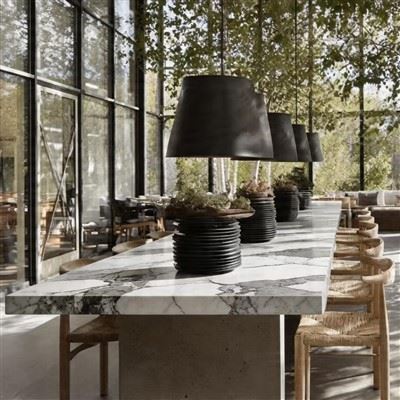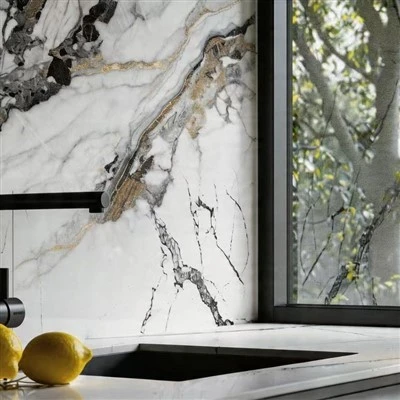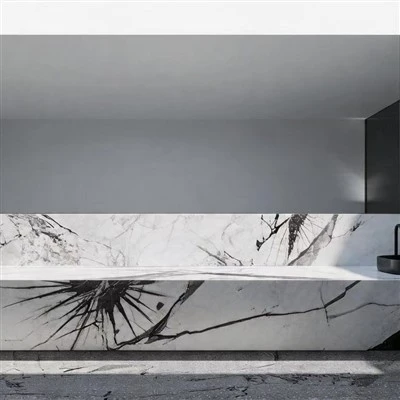
The origins of quartz can be traced back to earth mineralogy. Silicon dioxide (SiO₂) is the basic component of quartz, existing in crystalline form in nature with a hardness of up to 7 on the Mohs scale, second only to diamond. In ancient times, people used natural quartz to carve jade artifacts, symbolizing purity and resilience. However, the modern term "quartz" often refers to man-made products.
Classifying quartz, it can be divided into two main categories: natural quartz and artificial quartz. Natural quartz originates from the high pressure and temperature of the Earth's crust, forming minerals such as quartzite or vein quartz. It retains the texture and color of nature, but its mining is limited by geological conditions, resulting in low yields. Conversely, artificial quartz is an innovative material that emerged in the 1990s, pioneered by companies like DuPont. Its core principle is to simulate the crystal structure of natural quartz, achieving large-scale production through industrial processes.
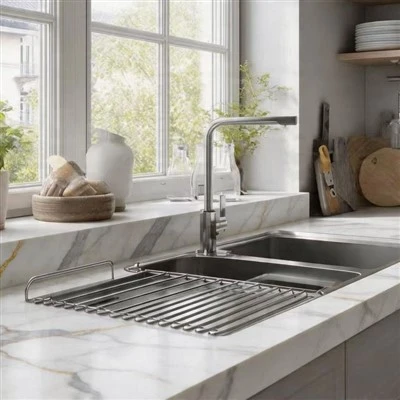
In home applications, artificial quartz accounts for over 95%, commonly used for kitchen countertops, wall panels, and flooring. Why is artificial quartz more popular? Because it solves the pain points of natural stone: radiation hazards and processing difficulties. At the same time, artificial quartz stone falls under the broader category of artificial stone, alongside acrylic and gypsum artificial stone, but it boasts superior hardness. To put it simply, natural quartz stone is like a naturally beautiful woman, unique yet delicate; the artificial version is like a technologically advanced model, perfect but requiring verification. Understanding the classifications is the first step in material selection, preventing you from being misled by merchants using the word "natural."