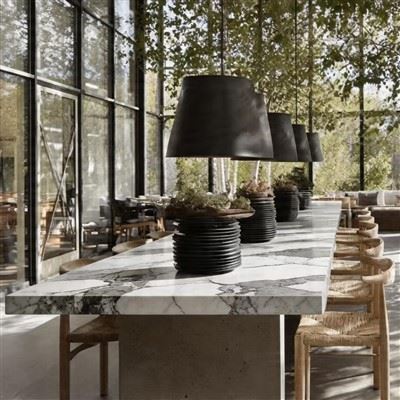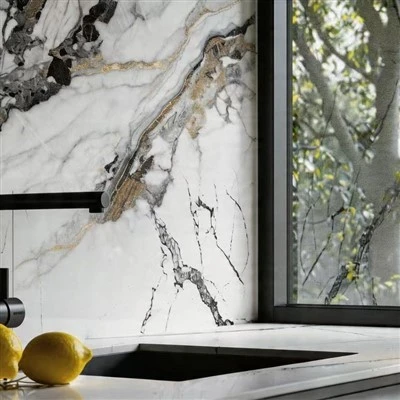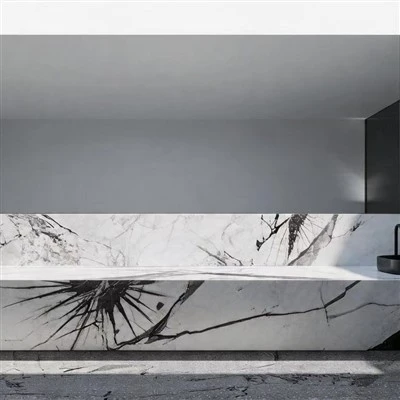
Compared to man-made quartz, natural quartz stone possesses a more primal and wild quality. Formed millions of years ago through geological processes, its crystals are compacted under high pressure and temperature. A typical example is quartzite, with its surface covered in mineral vein patterns, ranging in color from milky white to golden yellow, resembling marble's "hardcore sibling."
Its distinctive features include: a hardness comparable to man-made quartz (Mohs 7), strong corrosion resistance, and the ability to withstand acid and alkali tests. It also boasts excellent fire resistance, with a melting point exceeding 1600℃, making it suitable for high-end villa countertops. Its natural texture is its soul, making each piece unique and imbuing the space with an artistic feel. However, its drawbacks cannot be ignored: its porous structure makes it prone to staining, requiring regular maintenance with sealing agents; more importantly, there is the risk of radiation. Quartzite may contain trace amounts of uranium and thorium, and long-term exposure may pose health risks, such as nerve damage or cancer. The mining process also damages the ecosystem, and processing is time-consuming-from quarry to polishing plant, it takes several months.